The Wick Academy

The Wick Academy

A three-part academy for introducing brokers. Learn to judge a deal, build a network, grow a personal brand and trade with a written plan.

Parts
3
Chapters
11
Trading tiers
3
Updated
Oct 2026
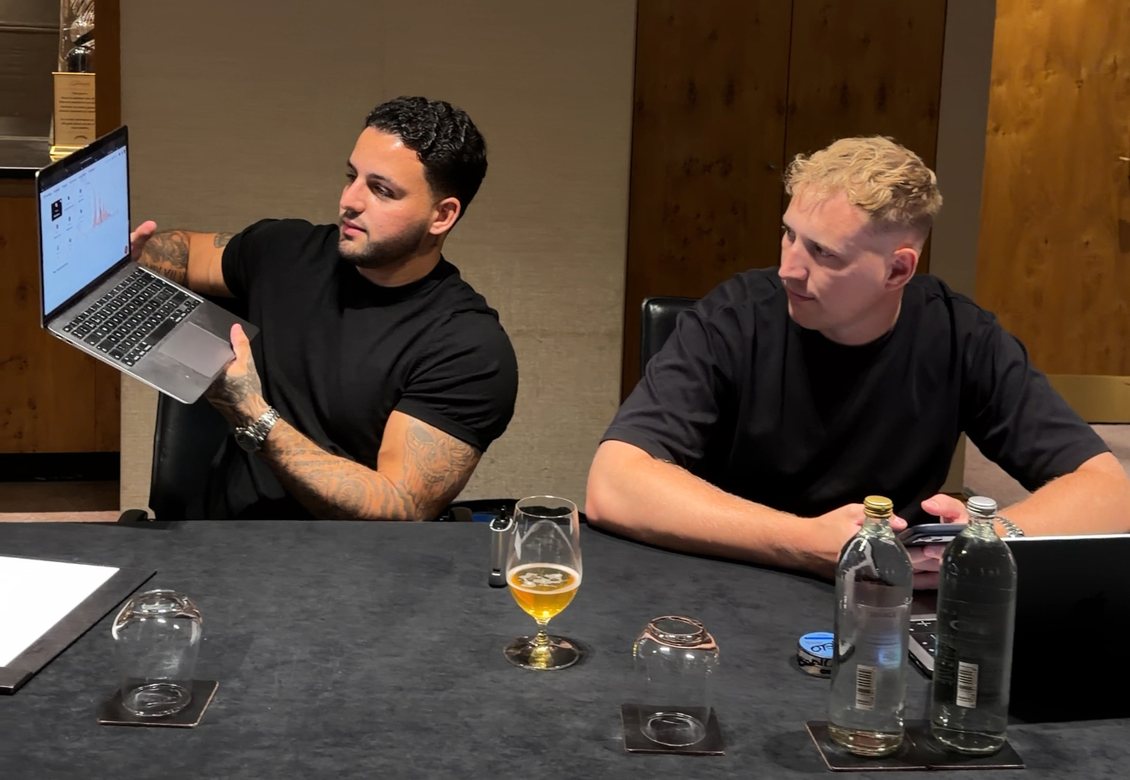
Two men in black t-shirts at a boardroom table, one turning a laptop toward the camera.
Part I

Grow your IB

An IB earns from the volume their clients trade. Every chapter in this part works on one of three levers: the deal, the network or the clients.

Chapter 01

Recognise a good deal

An IB deal is a contract about money, risk and time. Judge all three before the headline rate.

The five deal types

ModelYou are paidSuitsCheck first
Rebate per lotA fixed amount for every lot your clients trade, win or lose.Active, high-volume traders.Which instruments count, and whether rates differ by product.
Spread shareA share of the markup the broker adds to spreads.Clients on standard accounts.Your income moves when spreads widen or tighten.
CPAOne payment per client who deposits and meets a condition.Fast growth from a large audience.The qualifying condition and any clawback period.
Revenue shareA percentage of the broker's net revenue from your clients.A stable book built over years.How negative months are treated and whether they carry forward.
HybridA smaller CPA plus a lower rebate or revenue share.IBs who want early cash and long-term income.Total value over twelve months against the pure models.

The ten-point scorecard

Tick each statement you can prove from the contract or a live test. The score is a rule of thumb for deciding where to negotiate.

0 / 10

Tick what you can prove to see where the deal stands.

Red flags

  • The broker or its marketing promises clients a profit or a return.
  • A rate far above every other offer, with no explanation of how it is funded.
  • No regulator name or licence number you can look up.
  • Payouts that arrive late, change in size or need chasing.
  • Pressure on you or your clients to deposit more to keep a rate or a bonus.
  • Changes to the terms without written notice.
Chapter 02

Expand your network

A sub-IB multiplies your reach and your workload at the same time. Build the process before the team.

Four stages

  1. Your own clientsProve the onboarding and teaching process on people you work with directly.
  2. One sub-IBBring in someone you can train, with their own deal terms and your override written in.
  3. A partner teamHold a weekly call, share one onboarding pack and show each partner their own numbers.
  4. Several brokers and regionsAdd a second broker for clients the first cannot serve, and partners in new markets.

Where partners come from

  • Educators and creators with an audience that asks about trading.
  • Traders who already mentor friends.
  • Admins of Telegram, Discord and WhatsApp communities.
  • Clients who teach others what you taught them.

What a sub-IB needs from you

  • The split in writing, before they bring a single client.
  • An onboarding pack they can use on day one.
  • Access to their own reports.
  • A named person to call when a payout or a client needs attention.

Pay on the date you promised and never promise a partner an income. Recruit people you would be willing to train for a year.

Chapter 03

Run your IB like a business

A master IB works from a calendar and five ratios, and fixes the weakest ratio first.

A weekly rhythm

  • Monday. Review last week's sign-ups, funded accounts and lots.
  • Tuesday. Hold the partner call and answer open questions.
  • Wednesday. Batch the week's content in one sitting.
  • Thursday. Message dormant and drawing-down clients.
  • Friday. Reconcile payouts against reports and write the weekly numbers.

The five ratios

RatioFormulaIt tells you
Funding ratefunded accounts ÷ sign-upsWhether your onboarding converts interest into money.
Active rateclients trading in 30 days ÷ funded accountsHow many funded clients actually trade.
Lots per active clientlots in the month ÷ active clientsHow much volume each active client produces.
Rebate per active clientrebate earned ÷ active clientsWhat one active client is worth to you each month.
90-day retentionstill trading at 90 days ÷ fundedWhether your teaching keeps clients solvent and active.

The ratios multiply, so a gain in the first one lifts every number after it. Review them monthly.

Chapter 04

Grow and manage your clients

Your income rises when clients stay solvent and keep trading. Risk education is part of the business.

Five segments

SegmentWhoWhat to do
NewFirst 14 days after funding.Hold an onboarding call, agree written risk rules and start with one pair on one timeframe.
ActiveTraded in the last 30 days.Offer a weekly review, answer questions within a day and share the journal template.
DormantNo trades for 30 days.Send one personal message asking what changed, then invite them to the next session.
Large volumeYour top clients by lots.Give a direct line and review their risk per trade with them.
Drawing downAccount down sharply.Suggest a smaller size and a pause. Never encourage a deposit to recover losses.

Teach position sizing before entries

A client who risks 1% per trade can be wrong many times and still be trading next month. A client who risks a third of the account cannot. Start every new client on the sizing rule in Chapter 09.

Managing client money, or selling trade signals for a fee, can be a regulated activity in your country. Teach and refer, and check the rules before you do more.

Chapter 05

Five and six figures a day

Five figures is $10,000 a day and six figures is $100,000. The calculator shows the volume behind each.

Daily target
Lots every trading day
1,667
Active clients needed
834
Per month (21 trading days)
$210,000
Per year (252 trading days)
$2,520,000

Illustrative arithmetic, not a forecast. Rebates, volumes and client behaviour differ by broker and market, and income cannot be guaranteed.

The levers

  • Rate. A better deal raises income per lot without any extra client.
  • Active clients. Funding rate and active rate decide how many sign-ups become volume.
  • Retention. Clients who stay solvent keep producing lots month after month.
  • Sub-IBs. An override on partner volume adds income without adding your own client calls.
Part II

Personal brand and marketing

People join an IB they trust, and trust comes from being useful in public. This part covers what to say, how to come across and how attention becomes a funded account.

Chapter 06

What to teach

Teach the same five subjects to clients and to sub-IBs, at different depths.

Five content pillars

  1. Trading basicsPips, lots, sessions and order types, taught as a short path with one idea per post.
  2. Risk and psychologyPosition sizing, daily loss limits and how to behave after a losing streak.
  3. How brokers and rebates workExplain the IB model openly, including how you are paid.
  4. Platform walkthroughsOpening an account, placing an order, reading a statement.
  5. Your processYour weekly review, your journal and your mistakes, shown as they happen.

Teach your sub-IBs

  • How to read the broker's partner reports.
  • How to run a first conversation with a prospect.
  • What they can and cannot say about returns.
  • How to track a link per channel.

Leave out

  • Profit promises or screenshots of one winning day.
  • Pressure to deposit before a deadline.
  • Anything you would not say with the broker's compliance team listening.
Chapter 07

Look approachable

A stranger decides in seconds whether you are someone they could message. Make that decision easy.

Profile

  • A clear photo of your face, in daylight, looking at the camera.
  • A bio that says what you teach and who it is for.
  • One link, to your guide or your community.
  • A pinned post that introduces you and your process.

Content and tone

  • Talk to the camera and explain jargon the first time you use it.
  • Show the process and the losses, not just the wins.
  • Reply to every comment and message within a day.
  • Write the way you would explain it to a friend over coffee.

Avoid

  • Cars, watches and holidays offered as proof that your method works.
  • Urgency timers and limited-place countdowns that reset.
  • Income screenshots without the full account history beside them.

Posts about leveraged products are financial promotions in many countries, and the rules cover what you publish yourself. Check your local regulator's guidance before you post.

Chapter 08

Funnel traffic

A funnel is five steps. Measure each one so you know which step is losing people.

  1. Attract

    Short videos and posts that answer one question each.

    Measure views to profile visits

  2. Capture

    A link in your bio to a free guide or a community.

    Measure visits to joins

  3. Converse

    A message or short call to learn their goal and experience.

    Measure joins to conversations

  4. Onboard

    Account opening through your link and a written first-trade plan.

    Measure conversations to funded

  5. Retain

    A weekly room or review that keeps clients trading with rules.

    Measure 90-day retention

Track every channel

Give each channel its own link so the report shows which one produces funded accounts. The pattern below is a tracking tag your broker or link tool adds to the end of a URL.

Part III

Trading in three tiers

An IB who trades teaches better and keeps clients longer. Pick the tier that matches where you are today.

Risk warning. Forex and CFDs are leveraged products and you can lose money quickly. This is education, not advice. Practise on a demo account first.

Chapter 09

Beginner trading

Learn seven terms with real arithmetic, then follow six rules for your first week.

Seven terms

TermMeaningWorked example
PipThe standard step of price movement. On most pairs it is the fourth decimal place.EUR/USD from 1.0850 to 1.0851 is 1 pip.
LotTrade size. One standard lot is 100,000 units of the base currency.1 lot of EUR/USD moves about $10 per pip. 0.10 lot moves about $1.
SpreadThe gap between the buy and sell price. It is the cost of entering.1.2 pips on 1 lot costs about $12.
LeverageLets you control a position larger than your deposit.At 30:1, $1,000 controls $30,000. A 1% move against you is $300, or 30% of the deposit.
MarginThe part of your balance held back to keep a leveraged position open.At 30:1, a $30,000 position needs $1,000 of margin.
Stop lossAn order that closes the trade at a price you set in advance.25 pips on 0.2 lot of EUR/USD loses about $50.
Take profitAn order that closes the trade when it reaches your target.50 pips on 0.2 lot of EUR/USD makes about $100.

In the UK and EU, retail leverage on major currency pairs is capped at 30:1. Other countries set their own limits.

RisingFalling HighCloseOpenLow HighOpenCloseLow Body wick
A candle records the open, high, low and close for one period. The body spans open to close and the wicks reach the extremes.

Sessions

Four sessions pass the market around the clock: Sydney, Tokyo, London and New York. Most volume arrives when London and New York overlap, and spreads on major pairs are usually tightest then.

Six rules for week one

  • Risk no more than 1% of the account on any trade.
  • Trade one pair on one timeframe.
  • Stay on demo until 50 trades follow your written rules.
  • Write the stop loss before you enter.
  • Skip central bank decisions and jobs data.
  • Journal every trade: pair, entry, stop, target, result, reason.

Courses and programmes

Choose the course that matches where you are, or the full programme if you want everything.

Elite Trading & IB Mentorship

£9,997

Six-month programme

Apply for the programme

What is included

  • Complete beginner-to-advanced trading education
  • Gold trading strategies, risk management and psychology
  • How to establish and grow an IB business
  • Marketing, branding, social media and lead generation
  • Client acquisition, onboarding and retention systems
  • Weekly group coaching and monthly private mentorship
  • Business templates, operating systems and practical assignments
  • Six months of structured support and accountability
  • £297

    Trading Foundations

    Beginner trading education covering forex, gold, charts, technical analysis, risk management and trading psychology.

    Self-paced, 10 to 15 hours

    Enquire
  • £597

    Advanced Trading Masterclass

    Market structure, liquidity, gold trading strategies, entries, exits, backtesting and trade management.

    Self-paced, 15 to 20 hours

    Enquire
  • £997

    The IB Blueprint

    Understanding broker partnerships, commission structures, client onboarding, compliance, business models and building an IB operation.

    Self-paced, 15 to 20 hours

    Enquire
  • £1,497

    Client Acquisition & Marketing

    Instagram, TikTok, paid advertising, content creation, branding, lead generation, sales funnels and client retention.

    Course plus group workshops

    Enquire
  • £2,997

    IB Growth Accelerator

    Advanced IB partnerships, team building, sub-IB networks, operational systems, marketing strategies and business scaling.

    8-week programme, group coaching

    Enquire
  • £4,997

    Complete Trading & IB Academy

    All trading, IB and marketing courses, plus live group coaching, implementation workshops and 12 weeks of support.

    12-week programme, full course access

    Enquire

Prices are in pounds sterling. Enquiries are answered on WhatsApp and no payment is taken on this site. Trading and IB income carry risk, and results are not promised. Read the terms.

Join the network

Choose a course, a programme or a place in the network. The team replies on WhatsApp.

  1. You send the formIt opens WhatsApp with your answers filled in.
  2. The team reads itYour level and goal decide which route fits.
  3. You get a replyA short call follows if there is a match.

Pressing send opens WhatsApp with your answers filled in. This page stores nothing.

Events

Three events are planned. Dates, venues and prices are not set yet, so register interest to hear first.

Date not set yet

Online

IB Masterclass

A live walk through Part I, using your own numbers where you want to.

  • Reading a deal against the ten-point scorecard
  • Building a network and a sub-IB pack
  • The five ratios and a weekly rhythm
  • Client segments and what each one needs
  • The arithmetic of five and six figures a day
Register interest
Date not set yet

In person

Trader Intensive

A full day on chart markup, stop and target placement and the advanced process from Part III.

Register interest
Date not set yet

In person

Network Dinner

An evening for IBs and sub-IBs to meet, compare notes and plan the next quarter.

Register interest